
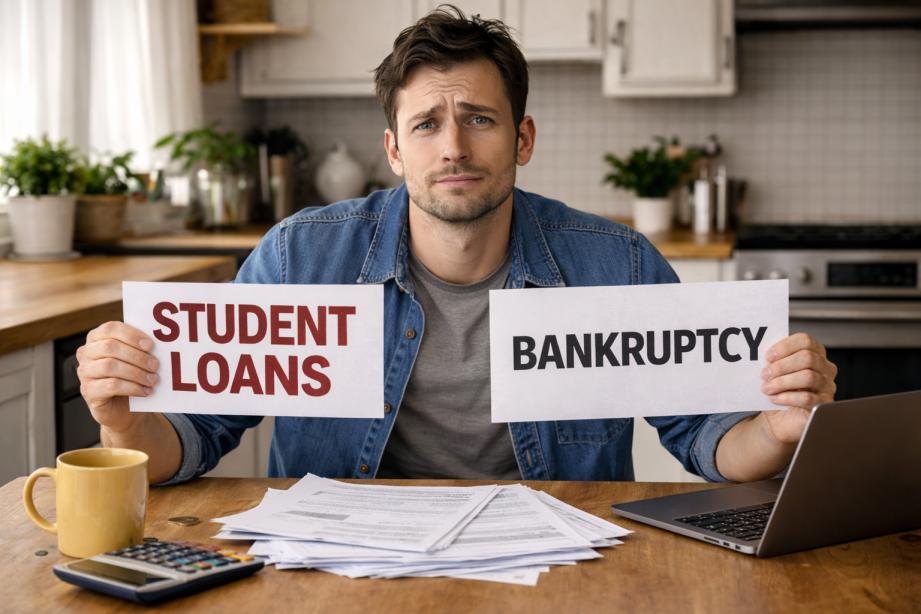
Most people have heard “bankruptcy can’t help student loans.” That’s incomplete. It’s true your student loans aren’t automatically discharged like credit cards, but there is a process to seek discharge based on undue hardship. And even when a discharge isn’t the right path, bankruptcy can clear other obligations so your student loans become manageable.
In this conversation with student-loan attorney Jay Fleischman, we unpack what “undue hardship” really means, how private vs. federal loans differ, why more attorneys are starting to revisit this area, and how many borrowers might realistically benefit.
Frequently Asked Questions
- Does bankruptcy ever discharge student loans?
- What is “undue hardship” and how do I prove it?
- What extra step do I need to take in bankruptcy for student loans?
- If I don’t qualify for discharge, can bankruptcy still help me?
- How do private student loans compare to federal loans in bankruptcy?
- What changed for federal loans under the 2022 DOJ guidance?
- Realistically, how many borrowers see meaningful relief through bankruptcy?
- Why do some bankruptcy attorneys say student loans can’t be helped?
- If I’m considering this, what should my first steps be?
FAQ: Does bankruptcy ever discharge student loans?
Yes. Student loans are not automatically wiped out, but courts can discharge them if you prove that repaying the loans would cause an “undue hardship.” That standard is higher than for credit cards or medical bills, but it is met in a meaningful subset of cases.
Courts look at income, necessary expenses, health, dependents, future earning prospects, and whether you handled the loans in good faith. When the evidence is strong, partial or full discharge can occur.
FAQ: What is “undue hardship” and how do I prove it?
“Undue hardship” generally means you cannot maintain a minimal standard of living if forced to repay, that this hardship is likely to continue, and that you acted in good faith with the loans.
Proof comes from documentation such as budgets, income history, medical or caregiving limits, repayment attempts, and evidence showing limited future earning capacity. Courts evaluate the full picture, not a single factor.
FAQ: What extra step do I need to take in bankruptcy for student loans?
You must file an adversary proceeding, which is a lawsuit within the bankruptcy case asking the court to decide whether the student loans are dischargeable.
This step is separate from the main bankruptcy filing. Without it, student loans usually survive even when other unsecured debts are discharged.
FAQ: If I don’t qualify for discharge, can bankruptcy still help me?
Yes. Eliminating credit cards, medical bills, and other unsecured debts can free up cash flow and make student loan payments manageable.
Even without discharging the loans, a cleaner budget, fewer collectors, and a court-managed reset often provide immediate relief.
FAQ: How do private student loans compare to federal loans in bankruptcy?
Private student loans are often more negotiable once an adversary proceeding is filed. Settlements or modifications are common when lenders face litigation risk.
Federal loans follow different rules. While discharge is possible, many borrowers may find income-driven repayment or forgiveness programs more practical than litigation.
FAQ: What changed for federal loans under the 2022 DOJ guidance?
Since late 2022, Department of Justice guidance has aimed to streamline how undue-hardship claims for federal loans are reviewed, making outcomes more predictable in qualifying cases.
The guidance does not guarantee discharge, but it clarifies the analysis when evidence shows long-term inability to repay and good-faith efforts.
FAQ: Realistically, how many borrowers see meaningful relief through bankruptcy?
In practical experience, roughly 20–30% of bankruptcy filers with student loans gain meaningful relief, whether through discharge, litigation leverage, or improved affordability after other debts are cleared.
The odds depend on loan type, evidence strength, and local court practices. An individualized review is critical.
FAQ: Why do some bankruptcy attorneys say student loans can’t be helped?
Student loan cases are more complex and uncertain than typical unsecured debts. There is no simple checklist, and outcomes depend heavily on evidence.
Differences between private and federal loans and evolving legal standards cause some attorneys to avoid this area altogether.
FAQ: If I’m considering this, what should my first steps be?
Start by gathering documentation: income, expenses, medical or caregiving constraints, repayment history, and correspondence with servicers. Build a budget showing whether repayment blocks a minimal standard of living.
Then consult with an attorney experienced in student loans and bankruptcy to evaluate whether an adversary proceeding or a non-bankruptcy option makes the most sense.
Disclaimer: This article is for general educational purposes only and does not constitute legal or financial advice. Bankruptcy laws and debt collection rules vary by state. If you’re dealing with debt collection or considering bankruptcy, you should speak with a licensed bankruptcy attorney who can review your specific situation.

