
By Philip Tirone
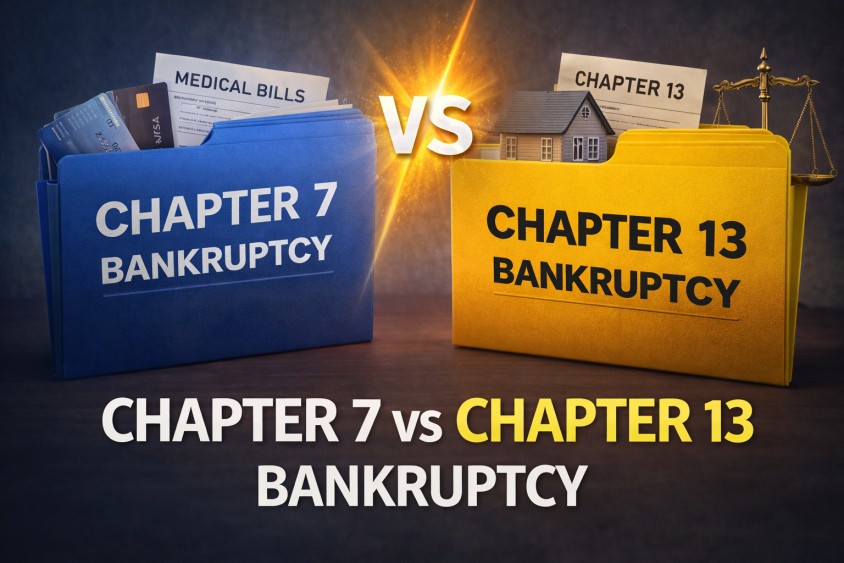
“Chapter 7 vs. Chapter 13” sounds like a pop quiz you didn’t study for, but it’s really a sorting hat. One chapter is built for a quick discharge of dischargeable debt. The other is built for structure: a court-approved plan that can protect assets and give you time to fix specific problems like mortgage arrears. The goal isn’t to pick the “cooler” chapter. The goal is to pick the one that solves your actual problem with the least collateral stress.
Frequently Asked Questions
- What’s the simplest way to explain the difference between Chapter 7 and Chapter 13?
- Why is Chapter 7 often called the gold standard?
- What does discharged mean?
- What kinds of debts are usually wiped out in Chapter 7?
- Who usually does not qualify for Chapter 7?
- What is the means test and why does it matter?
- Why do state exemptions matter so much in Chapter 7 cases?
- What does it mean to protect assets and what assets are we talking about?
- Why would someone choose Chapter 13 if they have to pay something back?
- How can Chapter 13 help if I’m behind on my mortgage?
- Can Chapter 13 lower interest pressure compared to normal debt?
- Is Chapter 13 only for high-income filers?
- Can a Chapter 13 feel less stigmatized for some people and why?
- How soon can I buy a home after Chapter 7?
- How soon can I buy a home while in Chapter 13?
- Can bankruptcy help with repossessions or past-due rent?
- What’s the biggest mistake people make when deciding between 7 and 13?
- Why does talking to a local bankruptcy attorney matter?
FAQ: What’s the simplest way to explain the difference between Chapter 7 and Chapter 13?
Chapter 7 is typically a faster process that wipes out dischargeable unsecured debt. Chapter 13 is a payment plan, often up to five years, where you repay a portion of unsecured debt and catch up on certain secured debts, then the remaining eligible unsecured debt is discharged at the end.
FAQ: Why is Chapter 7 often called the gold standard?
Because if you qualify, it can eliminate dischargeable debts in one step without putting you into a multi-year repayment plan.
FAQ: What does discharged mean?
It means you no longer owe that debt and the creditor cannot legally continue collecting it from you.
FAQ: What kinds of debts are usually wiped out in Chapter 7?
Common examples include credit cards, medical bills, personal loans, payday loans, collections, and some past-due rent. The key is that the debt must be dischargeable.
FAQ: Who usually does not qualify for Chapter 7?
People who earn too much under the means test or those whose assets or equity make Chapter 7 risky in their state are often directed toward Chapter 13 instead.
FAQ: What is the means test and why does it matter?
The means test evaluates your income to determine which bankruptcy chapter fits your situation. If your income is high, Chapter 13 may be required or the safer path.
FAQ: Why do state exemptions matter so much in Chapter 7 cases?
Exemptions determine what you are allowed to keep. These protections vary by state, and in some areas they make Chapter 7 easier to use, while in others they push more people toward Chapter 13.
FAQ: What does it mean to protect assets and what assets are we talking about?
It means choosing the bankruptcy chapter that helps you keep what matters based on your state rules and your equity. Assets can include home equity, vehicle equity, multiple properties, or other valuable property.
FAQ: Why would someone choose Chapter 13 if they have to pay something back?
Chapter 13 can solve problems Chapter 7 cannot. It allows you to catch up on missed mortgage payments, protect assets that may be at risk, and gives higher-income filers a structured plan to stabilize financially.
FAQ: How can Chapter 13 help if I’m behind on my mortgage?
Instead of needing a lump sum, Chapter 13 spreads past-due payments across the plan period, often up to five years, while you resume regular mortgage payments. This can help you keep your home.
FAQ: Can Chapter 13 lower interest pressure compared to normal debt?
It can reduce the pressure of compounding interest by placing your debts inside a structured plan instead of juggling high-interest accounts. The exact impact depends on your situation.
FAQ: Is Chapter 13 only for high-income filers?
No. While higher income is one reason, many people use Chapter 13 to protect assets or resolve mortgage issues regardless of income level.
FAQ: Can a Chapter 13 feel less stigmatized for some people and why?
Some people feel that way because creditors receive payments through the plan. It does not change the legal outcome, but it can feel emotionally easier for some.
FAQ: How soon can I buy a home after Chapter 7?
A common guideline is around two years after Chapter 7, depending on the loan program and your overall financial profile.
FAQ: How soon can I buy a home while in Chapter 13?
Some borrowers may qualify after 12 on-time plan payments, depending on loan guidelines and approval conditions.
FAQ: Can bankruptcy help with repossessions or past-due rent?
Dischargeable debts related to repossessions and past-due rent can often be addressed, but the details depend on your situation and state laws.
FAQ: What’s the biggest mistake people make when deciding between 7 and 13?
Trying to figure it out alone using generic advice. The right decision depends on local rules, income, and assets, so professional guidance is key.
FAQ: Why does talking to a local bankruptcy attorney matter?
Because the right chapter depends on your state laws, local practices, and your specific financial situation. A local attorney can translate your case into the best option for you.
Disclaimer: The content on this blog is for informational and educational purposes only and does not constitute legal or financial advice. Watching our videos and reading our blogs does not create an attorney-client relationship. Always consult a licensed bankruptcy attorney or financial professional about your situation.

